

Why drive system design is vital for automated liquid dispensing systems
Automated liquid dispensing machines must deliver high precision, repeatable performance, and compact design to function effectively in laboratory environments. A crucial factor in meeting these requirements is the electric drive system that powers the movement of the pipetting head. Sandro Walter, maxon’s Business Development Manager for Laboratory Automation, outlines the essential engineering considerations behind these systems.

Automated dispensers play a vital role in applications ranging from drug development and diagnostics to food and beverage quality testing. These machines handle small liquid volumes, often in the microliter range, enabling rapid, contamination‑free sample preparation and analysis. While individual system features depend on specific user requirements, all automated liquid handling platforms rely on coordinated motion systems capable of aspirating, transporting, and dispensing liquids with high throughput and consistent accuracy.
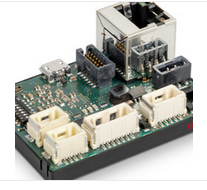
At the core of the motion structure is the liquid handling head, typically containing multiple channels. A multi‑axis architecture drives motion in three dimensions: two motors control X and Y travel via linear or belt-driven stages, while each individual channel moves independently along the Z axis through a dedicated drive. Every axis integrates a motor, gearhead, and servo controller, which are orchestrated by a higher-level motion controller or PLC.
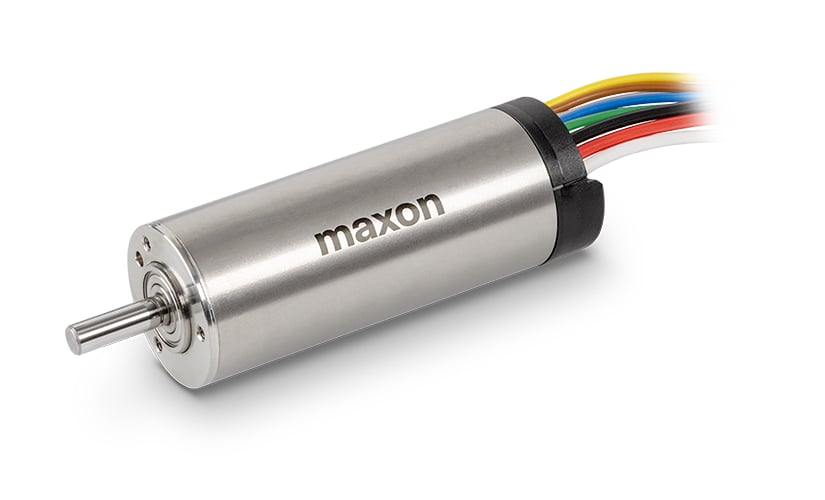
The mechanical transmission: timing belts, rack‑and‑pinion systems, or spindle drives varies with OEM design. Liquid aspiration and dispensing are powered by an additional drive, often a brushless DC (BLDC) motor coupled with a gearbox and controller, connected to a lead screw or ball screw to actuate a syringe or positive displacement pump.
Torque Density: A
Critical Requirement
OEMs aim to
design systems that serve broad application needs while maintaining precision,
speed, and robustness. Higher capability widens the potential user base and
reduces laboratory equipment footprints. Achieving this versatility requires
drive systems with high torque density, enabling multiple channels, such as
eight parallel pipetting channels, to fit into compact head assemblies.
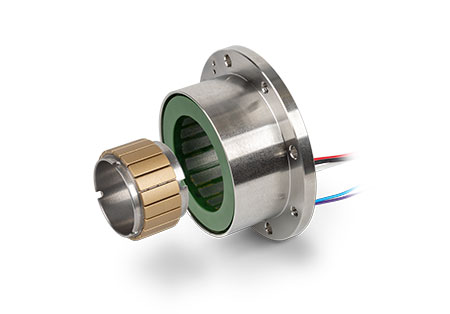
Because BLDC motors eliminate the brushes
and commutator of traditional DC motors, they operate with lower mechanical
losses, reduced friction, and less heat generation. This allows smaller motors
to deliver higher torque, making BLDC technology the standard choice for Z‑axis
motion and syringe pumps. Enhanced torque density also stems from optimized
copper windings, advanced magnetic materials, and improved electronic
commutation.
Typical liquid handling systems use 8mm diameter
BLDC motors to actuate pumps or channels with a 9mm pitch, while 16mm motors
are required for 18mm pitch configurations.
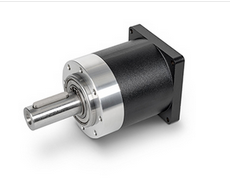
Gearbox design
also plays a major role in efficiency and torque capability. Low‑friction
bearings reduce resistance under load and improve support for axial and radial
forces. Materials that dissipate heat effectively further increase performance.
For syringe pumps, ceramic lead screws can significantly reduce friction,
eliminate lubrication needs, and extend operating life, an important factor in
contamination‑sensitive laboratory settings.
Minimizing friction not only boosts efficiency but also enables higher acceleration for the same current input, a key contributor to higher throughput. Faster cycles are essential for medical diagnostics, where quicker sample processing can shorten patient wait times, and for industrial laboratories striving for greater productivity.
BLDC motors offer significantly higher rotational speeds and more dynamic, responsive bidirectional motion than brushed DC designs. However, speed must be balanced with precision. Dispensing accuracy directly depends on the plunger’s linear motion; even minor deviations can affect volumetric output. Therefore, the combination of motor, gearhead, and lead screw must be engineered with tight tolerances.
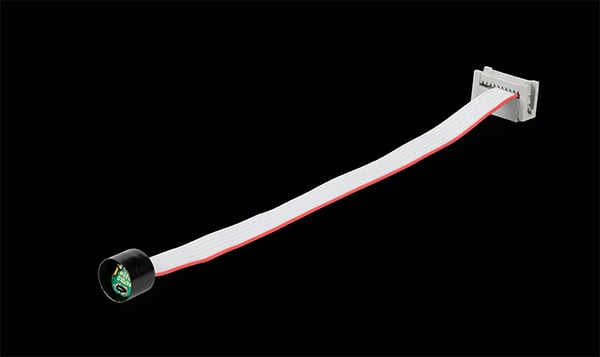
For pump actuation, a servo position controller paired with a high-resolution encoder ensures precise plunger displacement. This configuration supports repeatability within ±3 micrometers over lifetimes exceeding 10,000 hours. Although the X and Y axis requirements are less stringent than those of the pump, they also rely on accurate position controllers to maintain synchronized multi axis movement.
Mechanical robustness is equally important. Over time, wearing in a spindle system can introduce axial play. Using ceramic or preloaded ball screws helps maintain tight tolerances. Gearboxes with low backlash, such as strain wave designs, further increase precision and system stability.
Customization and Sub System Integration
Because each OEM has unique performance goals, customization is often essential. Collaboration begins with clearly defining targets such as repeatability, torque levels, and motion speed. A detailed evaluation of mechanical loads, control requirements, and interaction effects, such as feed force and cycle time determines the optimal configuration.
Common customization areas include motor winding adjustments to match voltage and speed requirements, specialized gear ratios, and optimized lead screw pitches. To simplify integration and improve performance, designing the entire drive assembly as a complete electromechanical sub system, including motor, gearbox, encoder, controller, and transmission components offers significant advantages.
maxon can also manufacture full pipetting channel assemblies based on customer specifications, improving stiffness, reducing mass, and ensuring seamless mechanical integration. When the drive system is treated not as a set of isolated components but as a unified sub assembly or cassette, mechanical and control considerations can be optimized holistically. This approach accelerates development, improves reliability, and enhances overall system accuracy.
Early co-design is vital. Involving drive engineering at the beginning of product development ensures that dynamic performance, thermal behavior, precision, and mechanical constraints are all addressed. This leads to smoother integration, faster time to market, and better end user performance.
More information