

While sterilization and packaging are unique aspects of product development, synergies can be realized from the joint planning of them.
The medical device industry has always been known for its highly regulated packaging/sterilization environment. In general, packagers and sterilizers are reluctant to change or innovate unless absolutely necessary, preferring well-validated procedures. However, restrictions on ethylene oxide (EO) use have now opened the door for innovation in medical device sterilization. Of course, changes in sterilization technologies also bring changes in packaging, where companies sometimes work together holistically.
Latest Trends
The medical packaging industry is moving toward greater flexibility, smarter process control, and packaging systems that are easier to validate and scale globally. “Manufacturers are looking for validation-ready platforms, integrated track-and-trace capabilities, and advanced vision inspection systems that improve quality control while supporting increasingly strict compliance requirements,” said Kirichkow. “At the same time, there is growing interest in automation and data-driven packaging systems that can help manufacturers maintain sterility, improve operational efficiency, and adapt more quickly to evolving global regulations around traceability and sustainability.”
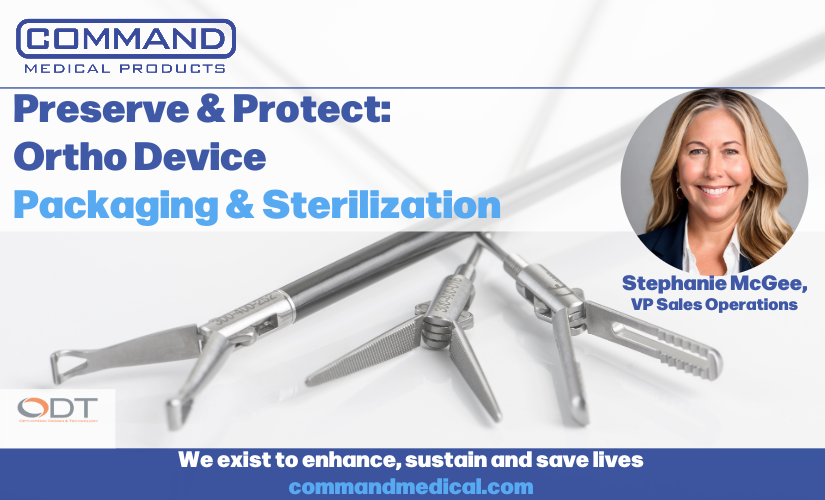
These efficiencies can be gained by incorporating sterilization and packaging earlier into the design phase. “Some clients are interested in validating more than one sterilization modality for their device to mitigate capacity constraints or protect business continuity from the unknown next crisis,” said Stephanie McGee, vice president of sales operations for Command Medical Products, an Ormond Beach, Fla.-based full-service contract manufacturing organization (CMO) specializing in fluid management systems for single-use complex disposable and diagnostic devices. “Risk mitigation, guaranteed capacity, sustainability, and cost containment continue to be key areas of interest.”
“Providers of gaseous method sterilization, regardless of the modality, are all looking at ways packaging can be changed in order to reduce consumables, shorten cycle times, and ultimately optimize cycles,” Scott added.
Another trend is the somewhat unexpected move to reduce foams in packaging. Whether in bulk packaging or 1UP configurations, foams are out and films are in due to the reduction of overall bulk solids in the waste stream. “The trick is in the re-design and managing the harmonic and impulse response of products to the change,” said Morgan. “This emerging trend underscores the need for packagers to have both a design-side capacity as well as a strong testing-side capability, or strong industry alliances to shore those up. Being able to work with customers to address their sustainability moves quickly with solid design and test data is what makes the difference here.”
There is also heavy emphasis on validation and strong packaging material change controls. It has been volatile from a raw material supply standpoint and “we have had to conduct many validations to confirm substitute raw materials are equivalent in our processing steps, even if the converters supplying them have already done so,” said McGee. “Helping our clients develop a strong risk-based rationale and action plan to execute while running parallel to production is what our customers need and want.”
More information